PAZUZU
PAZUZU is definitely the most infamous god of the ancient Sumerians and Akkadians. The earliest known texts related to PAZUZU date from the 6th century BCE.
There are some highly competent academic analyses about PAZUZU available online and in a myriad of scholarly publications. (A more accurate pronunciation according to modern scholars is: “BA TZU SA”).
20th Century Pop Culture has misrepresented the way ancient people engaged PAZUZU. Warner Brothers, William Friedkin, and SIMON (Peter Lavenda) have insured PAZUZU's place as a Pop Culture Icon. There hasn't been a more terrifying depiction of a demonic entity in film before or since.
But what most casual observers don't know is that historical evidence broadly indicates that PAZUZU was actually a beloved "guardian angel" figure among the Sumerians and Akkadians. PAZUZU offered protection against a hideous Demon called LAMASHTU. LAMASHTU was a hideous demon known for raiding villages and stealing children. Fans of Dr. Irving Finkel might be familiar with these details, who is probably the leading authority on all matters related to Cuneiform and ancient Sumerian religions.
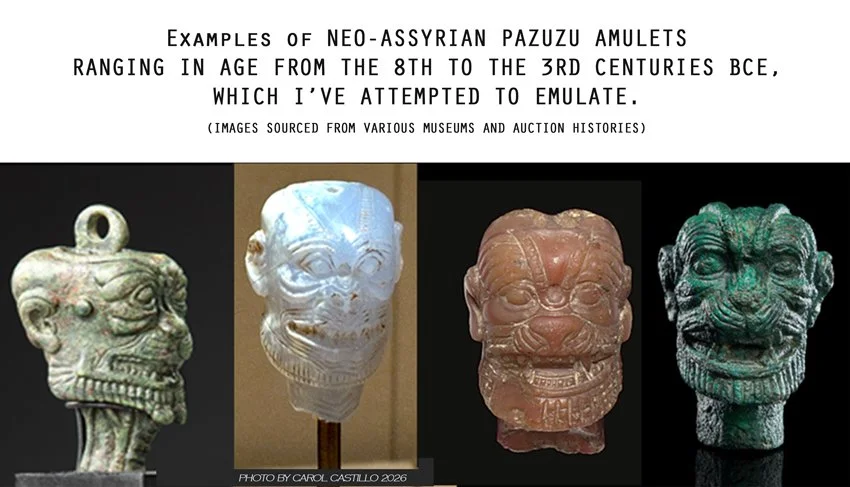
The demon portrayed in the Exorcist was better suited as a representtion of LAMASHTU than PAZUZU.
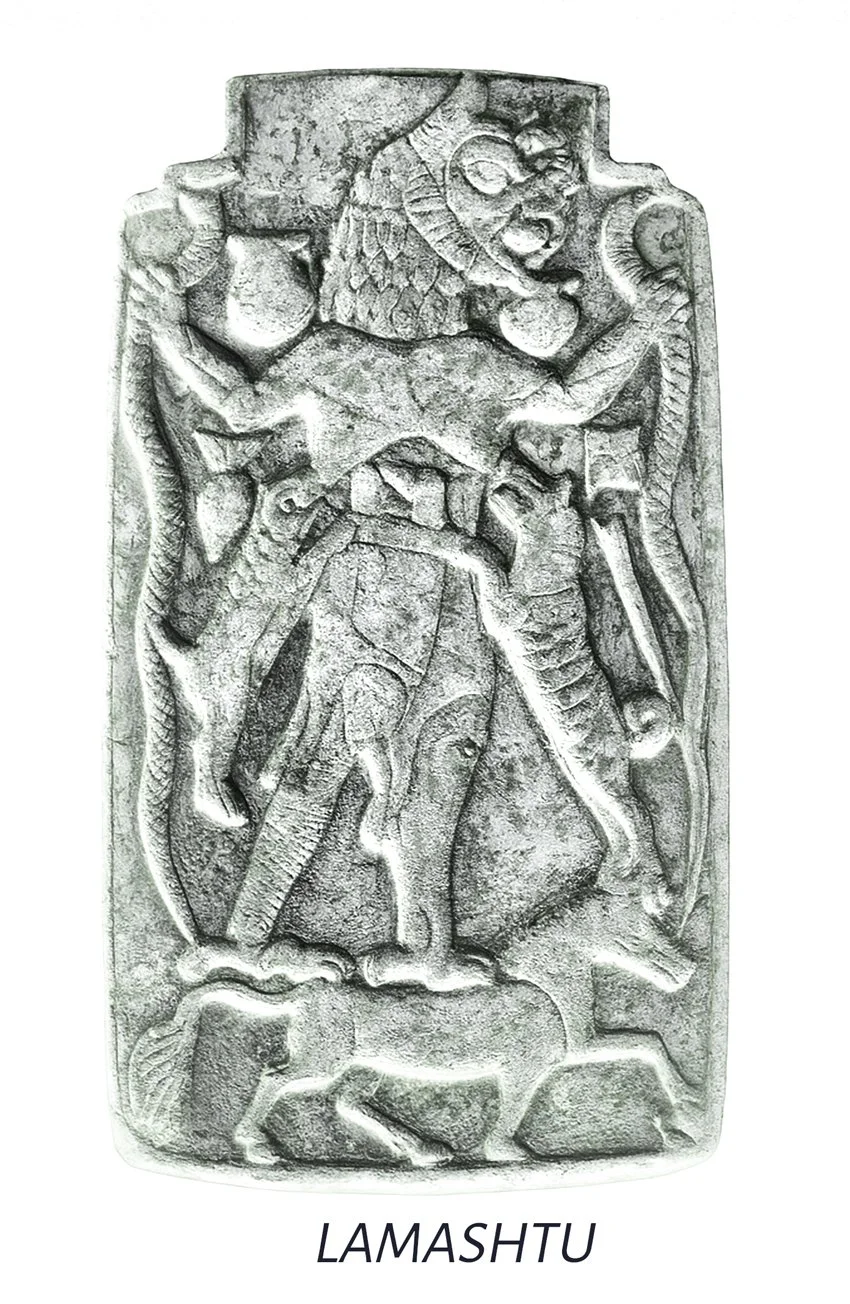
My obsession with PAZUZU came as a result of seeing the EXORCIST and reading SIMON’S NECRONOMICON sometime before I was 13 years old. The EXORCIST mirrored some events in my own life and offered a mythology I could relate to, and adopt as my own.
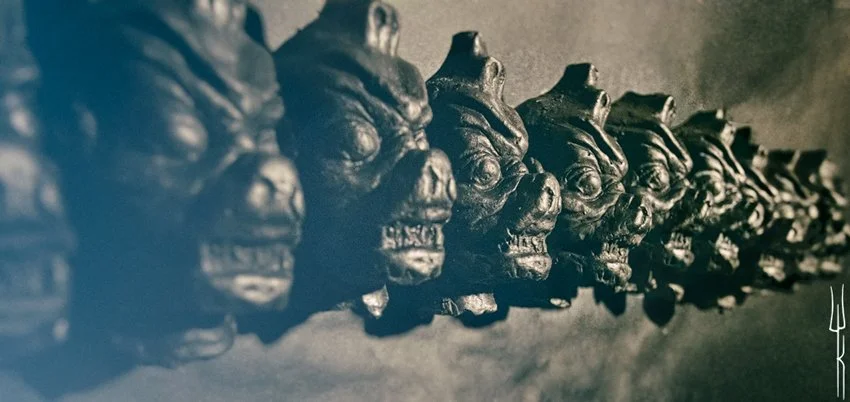
After starting the WORTHLESS ENDEAVORS website in 2011, one of my first priorities was to make something PAZUZU related. I decided to try to make copies of the PAZUZU head found in the beginning sequences of the EXORCIST movie, and make them inexpensive enough for anyone to afford.
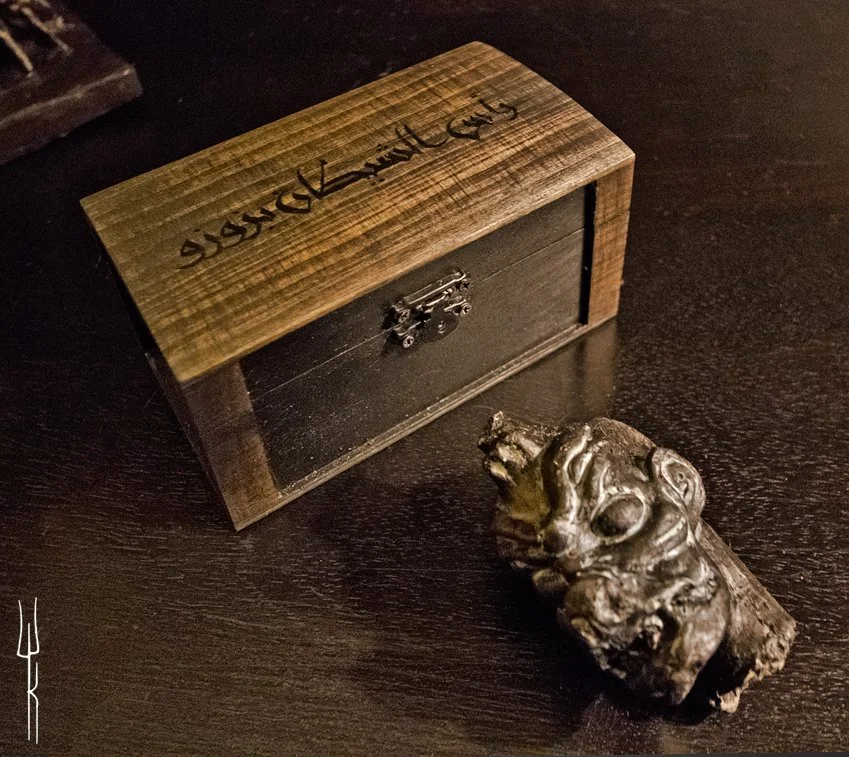
The result was a small painted plaster version which came in a wooden box that was hand stained a gray color, with a (poorly) translated version of PAZUZU written in Arabic script decorating the lid in ink.
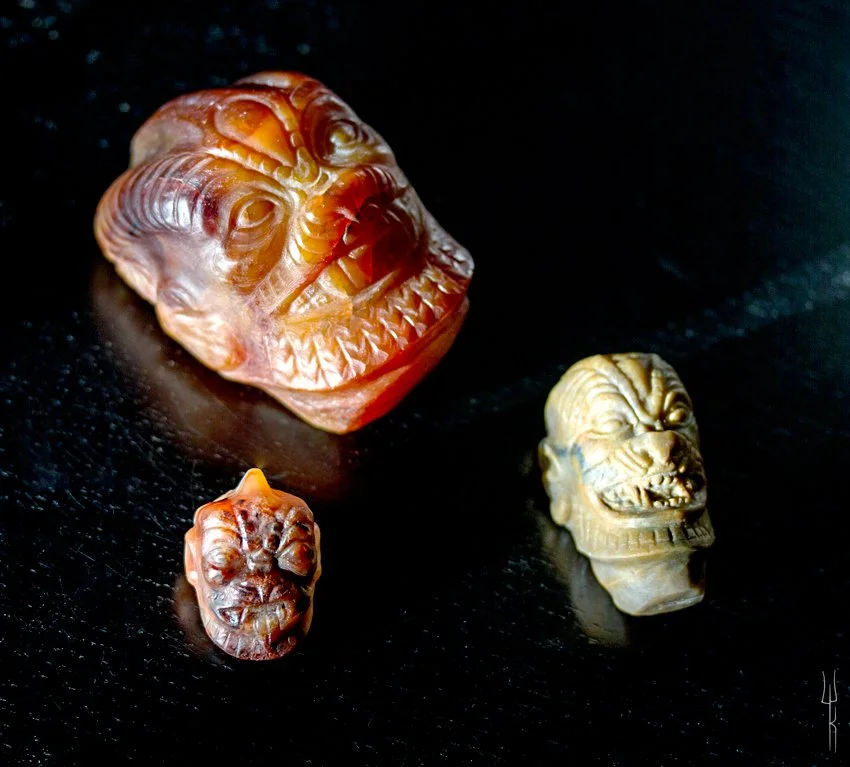
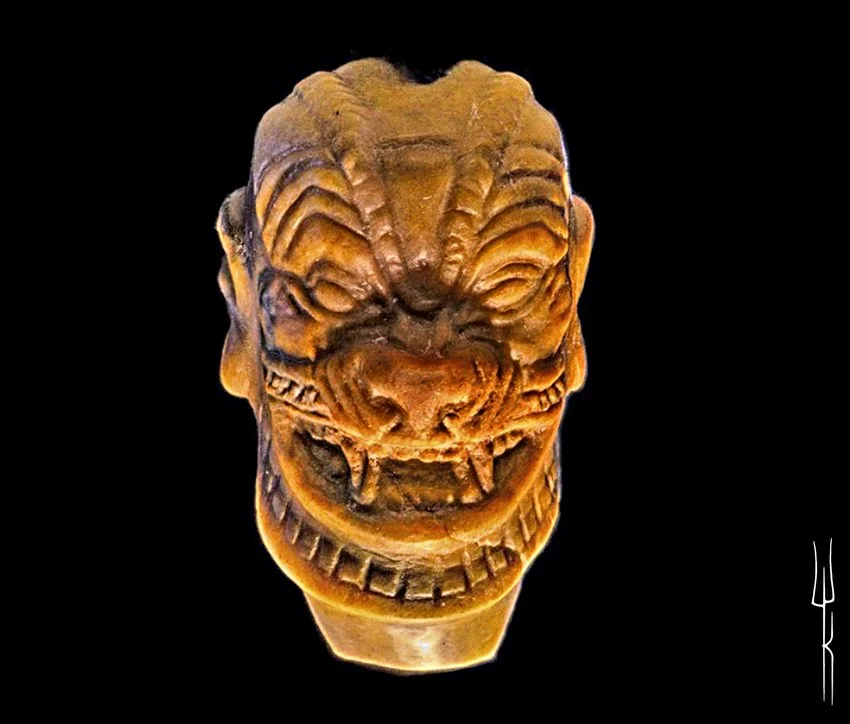
These small stone carvings were my first serious attempts at lapidary work.
The two red ones are carved from carnelian and the one on the right is a piece of limestone found on the grounds of Ruthin Castle, Wales, in 2018.
The larger carnelian PAZUZU head was carved from a what I believed was a solid carnelian sphere when I bought it at a gemological flea market in Edison, New Jersey.
The dealer I purchased the stone from couldn't have known the perfectly formed sphere was actually a geode. Luckily the geode revealed itself in a way that allowed me to continue carving, however the original plan had to be slightly altered in order to prevent the entire piece from crumbling apart.
The picture below is how the carnelian stone looked after I began the rough shaping and shortly before opening up an revealing itself:
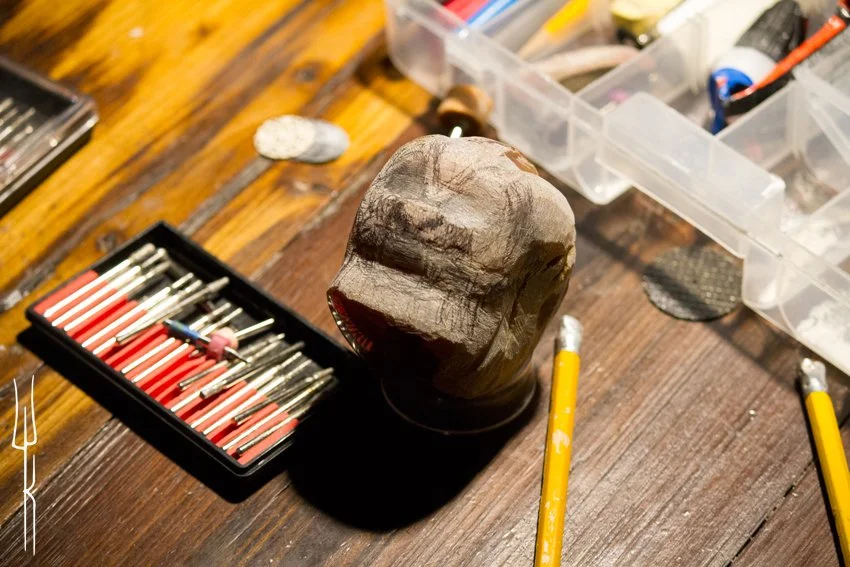
CARNELIAN PAZUZU HEAD GEODE
3 x 2 × 2 inches (7.62 x 5.08 cm) 2018
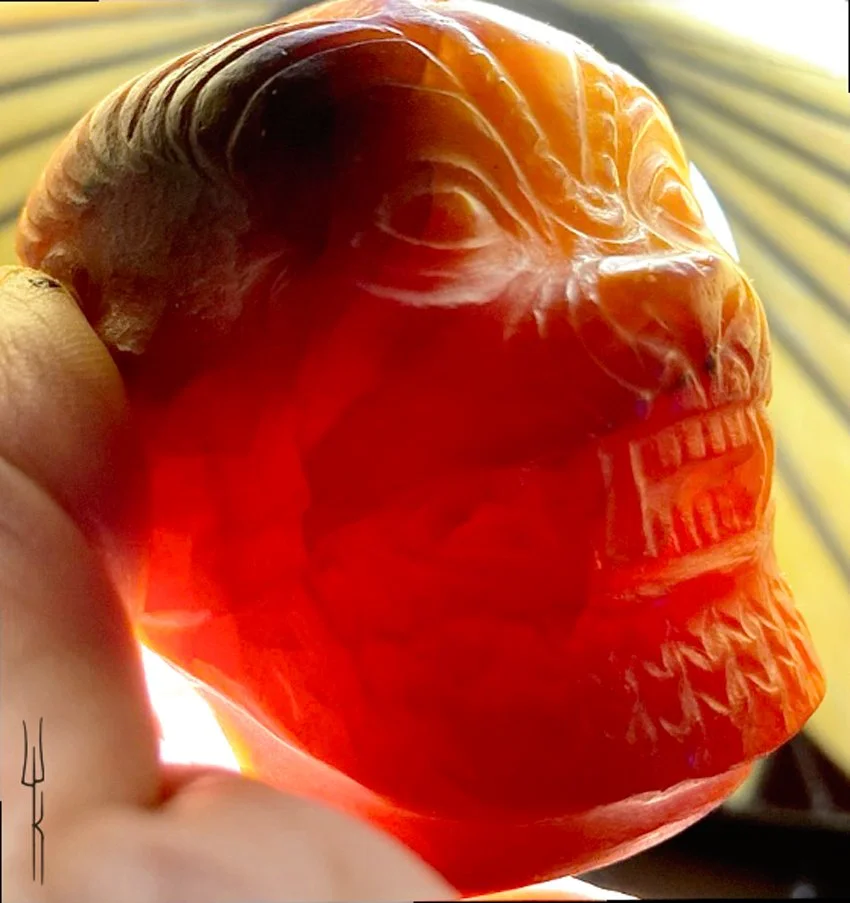
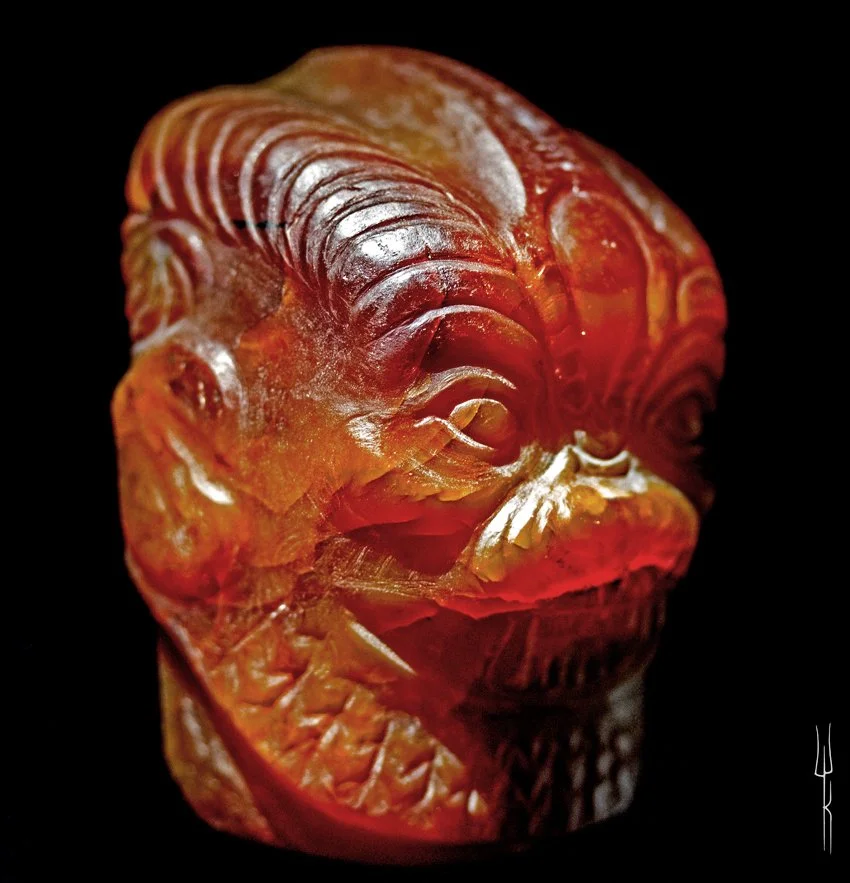
CARNELIAN PAZUZU HEAD
1 X 1.75 INCHES (2.54 X 4.44) 2019
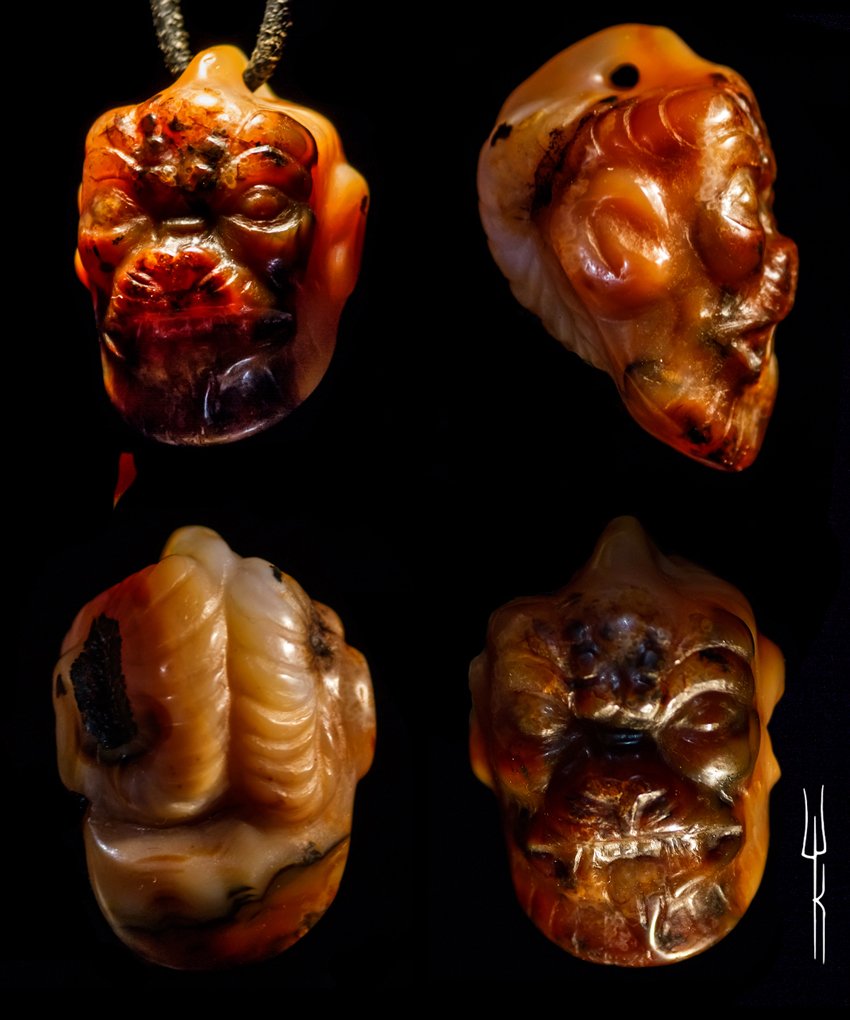
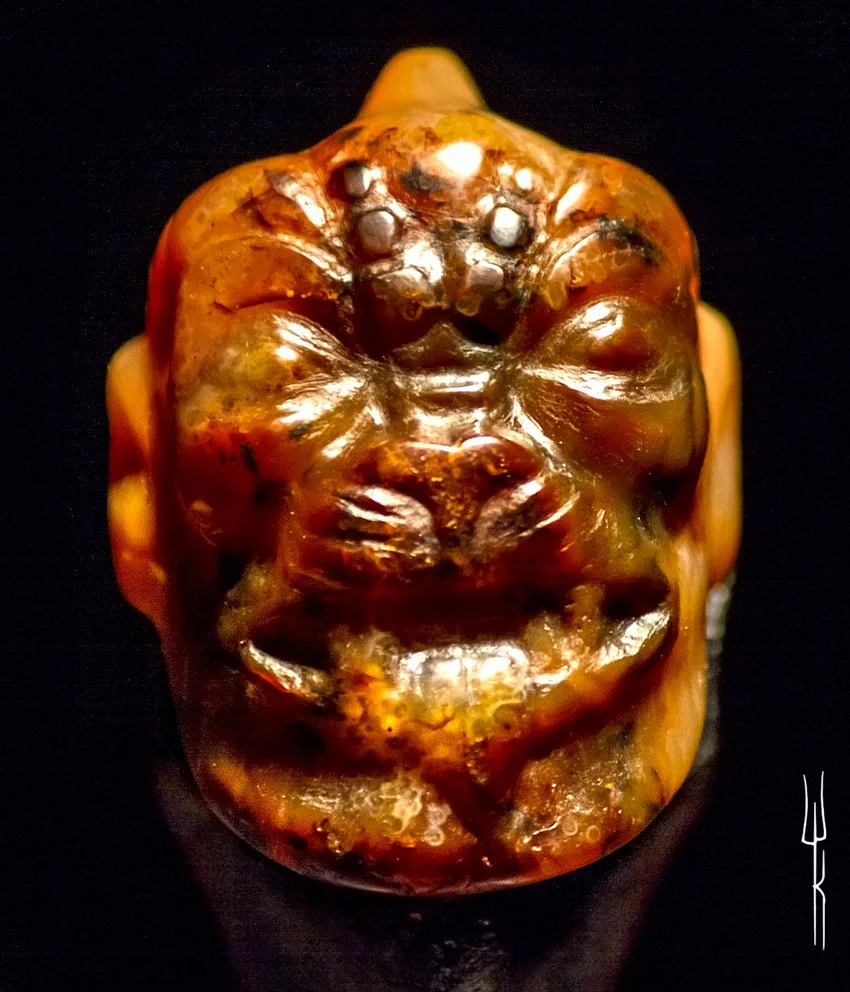
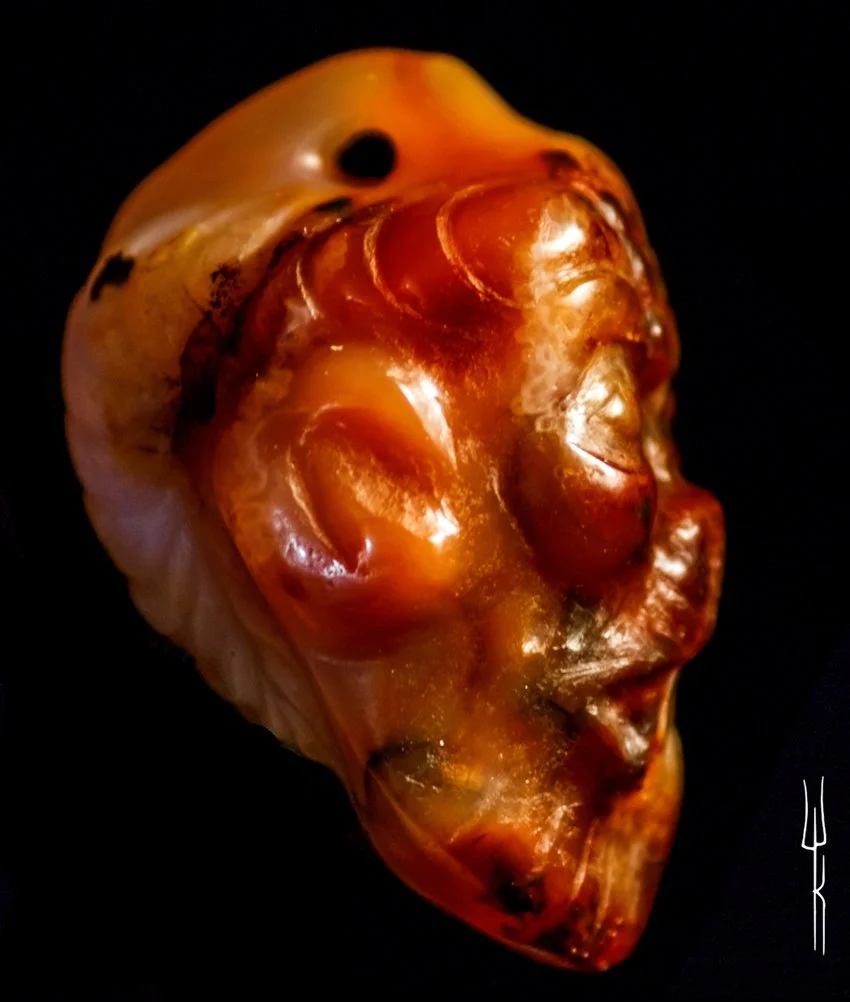
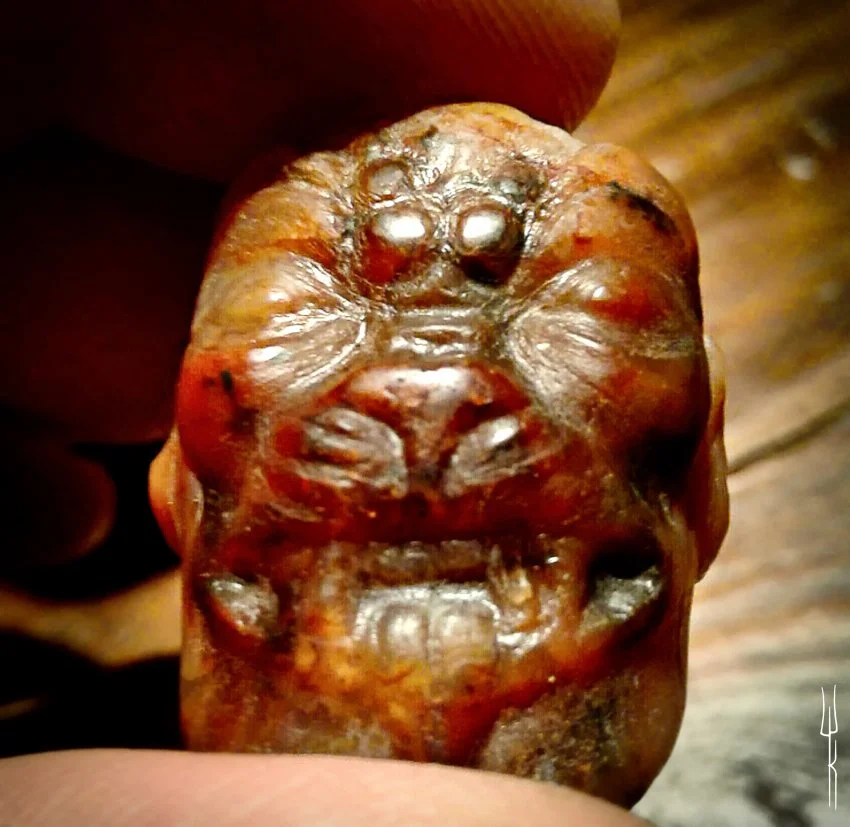
LIMESTONE PAZUZU HEAD
1 X 1 X 2 INCHES (2.54 X 2.54 X 5.08 CM)
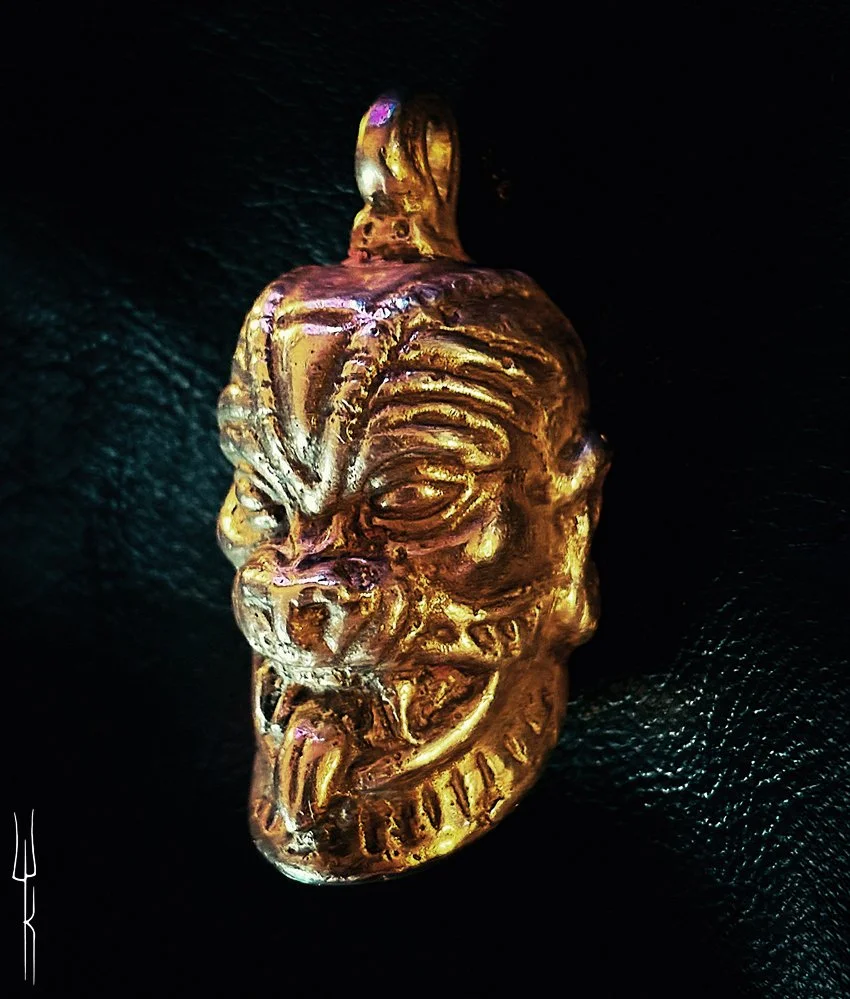
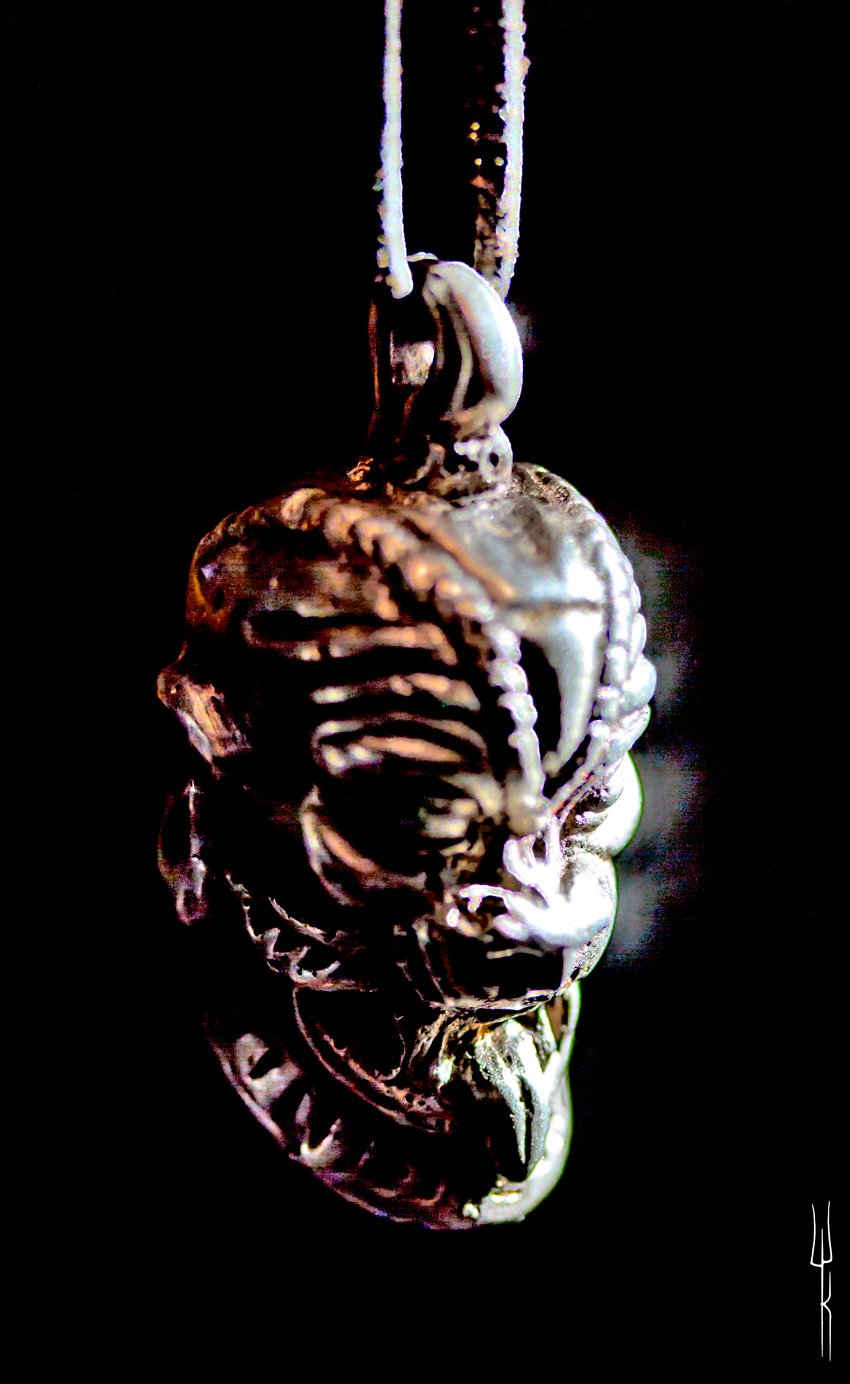
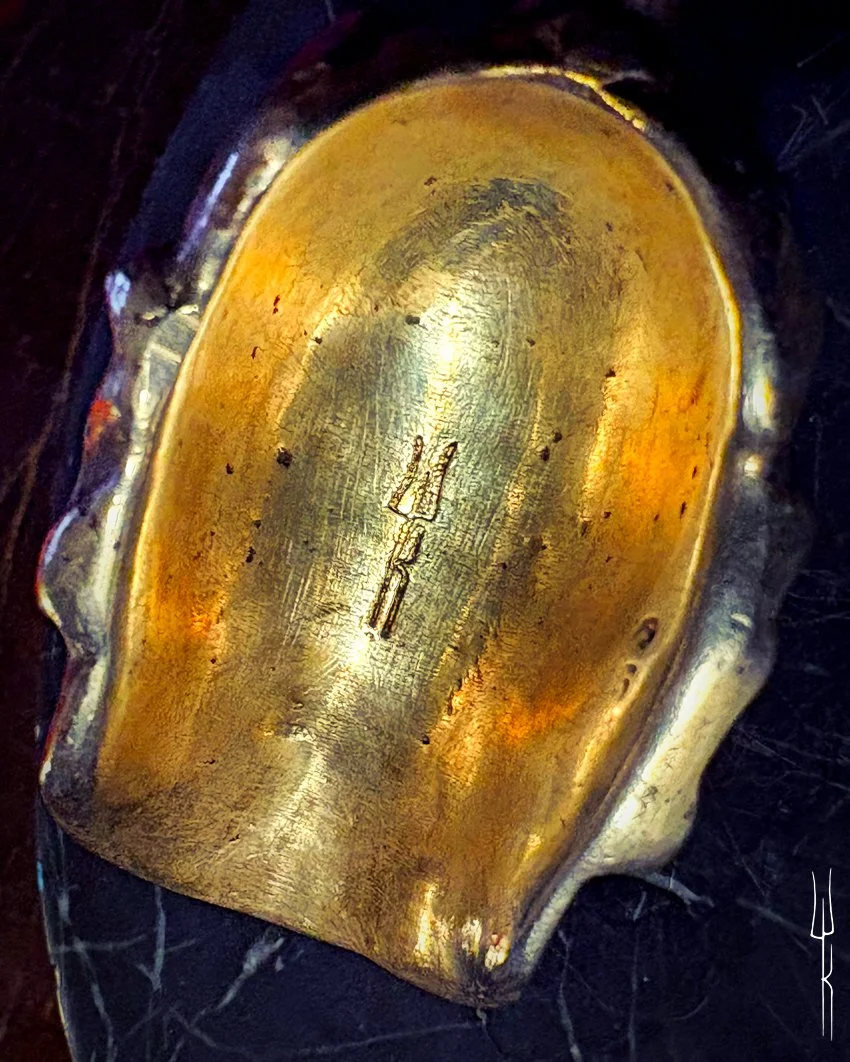
.999 SILVER PAZUZU HEAD
1 X 2 INCHES (2.54 X 5.08 CM) 2018